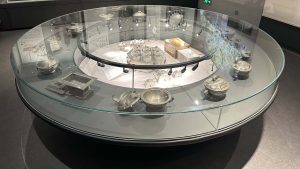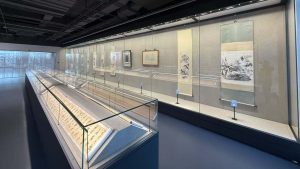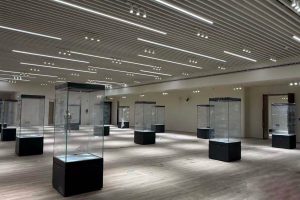
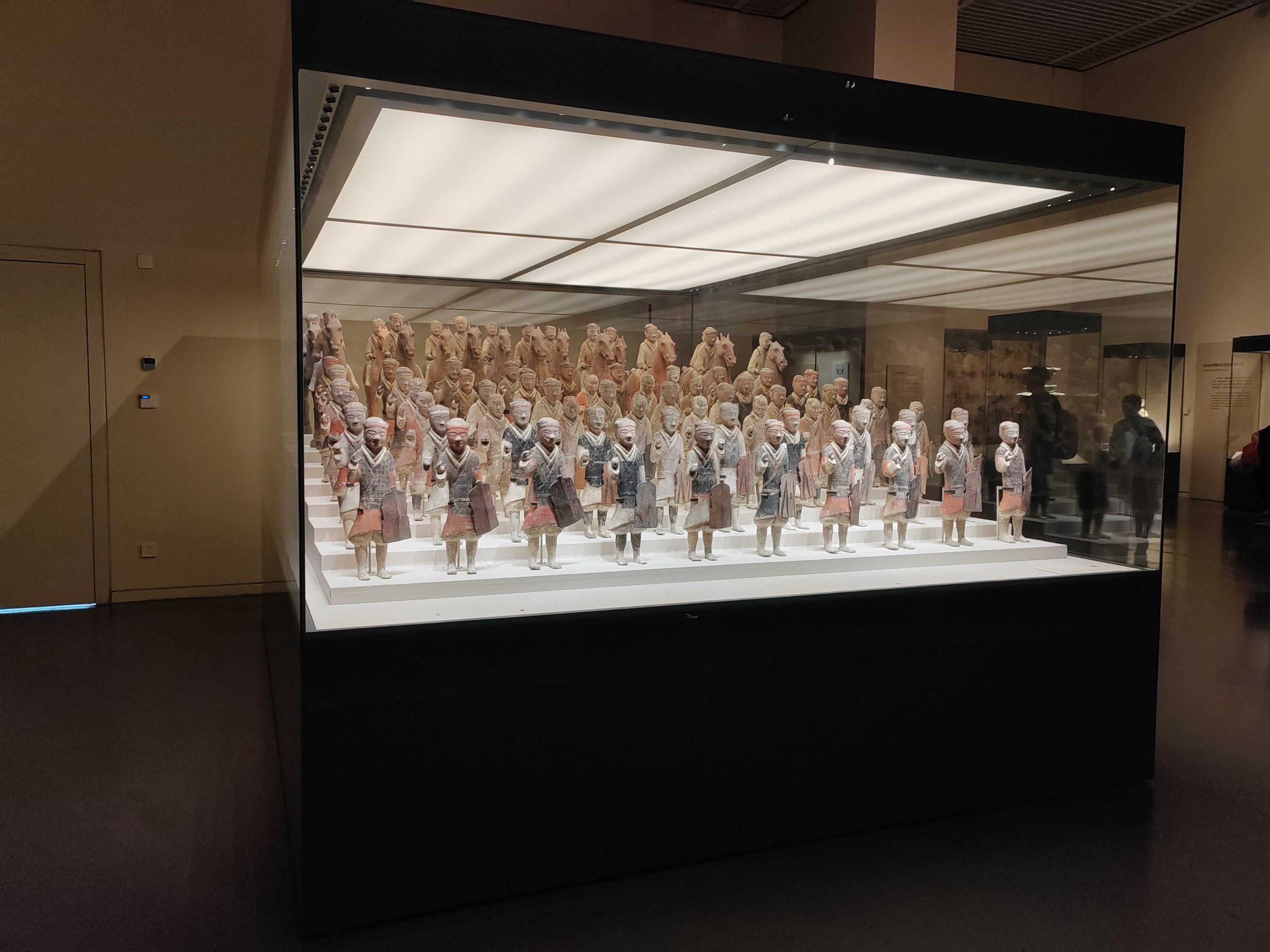


What glass is used Museum display cases use a special type of glass, commonly known as UV resistant glass or low-reflection laminated glass. This kind of glass has the following characteristics:
Anti-ultraviolet: Anti-ultraviolet glass can effectively block the penetration of ultraviolet rays and reduce the damage of ultraviolet rays to exhibits. Ultraviolet radiation is one of the most important damage factors to cultural relics and works of art. Long-term exposure to ultraviolet radiation will lead to color fading, material aging and other problems.
Low reflection: Low reflection laminated glass has excellent optical properties, which can reduce the reflection of the glass surface, so that the audience can view the exhibits more clearly and provide a better viewing experience.
High light transmission: This glass has high light transmission, which makes the exhibits show the most authentic colors and details under the light.
Safety: The laminated glass is sandwiched between two pieces of glass. Even if it is broken, the glass fragments will not fly away, which plays a role in protecting exhibits and visitors.
Anti-aging: UV-resistant glass has anti-aging properties, which can maintain its function and appearance for a long time.
Because of the advantages of UV-resistant glass, it has become a common choice in museum display cabinets to protect precious cultural relics and works of art, while enhancing the audience’s experience.
Museum Display Case Cost Guide: What Influences Pricing?
Learn what affects museum display case pricing, including materials, climate...
Read MoreHow to Choose the Right Museum Display Case for Your Project
Learn how to choose the right museum display case based...
Read MoreFreestanding vs Wall Mounted Museum Display Cases: Which Is Better?
Compare freestanding and wall mounted museum display cases. Learn which...
Read MoreMuseum Display Case Design: Key Factors Curators Should Consider
Explore the key factors in museum display case design, including...
Read More