
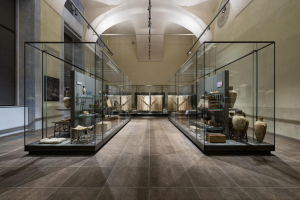
A Guide to Selecting Museum Display Cases: Balancing the Art of Conservation and Display
Museum exhibition cabinet is not only the “guardian” of cultural relics, but also the “window” of dialogue between the audience and history. The selection of appropriate display cabinets should take into account the protection of cultural relics, safety, display effect and space design. The following six core dimensions of Huabo Art Exhibition
I. Cultural Relics Protection Performance: Strict Standards for Materials and Processes
1.Material Selection
○ Fire prevention and theft prevention: chlorine-free and sulfur-free environmental protection materials (such as low-carbon steel and ceramic composite materials) are preferred to avoid corrosion of cultural relics by acidic substances.
○ Glass safety: low reflection ultra-white laminated glass (light transmittance ≥ 92%, reflectivity ≤ 1%) is used to prevent ultraviolet damage and ensure anti-theft and shatterproof.
○ The light trough is designed to be hidden to prevent glare that could disturb visitors’ sight.
2.Process Details
○ Double security system is adopted for locks, and keys are managed in different areas;
○ Manhole and maintenance space are reserved to ensure convenient maintenance of cultural relics;
II. Display Space Design: Scientific Planning of Size and Display
1. Display cabinet type and size match
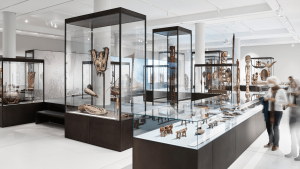
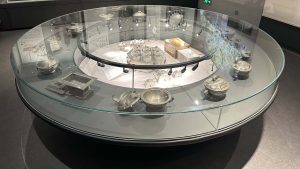
○ Independent cabinet (height 220 cm, glass on four sides): suitable for 360 ° display of precious cultural relics, such as bronzes and porcelain;
○ Inclined display cabinet (total height 140 cm): inclined design is convenient for visitors to look down and observe plane cultural relics such as calligraphy, painting and coins;
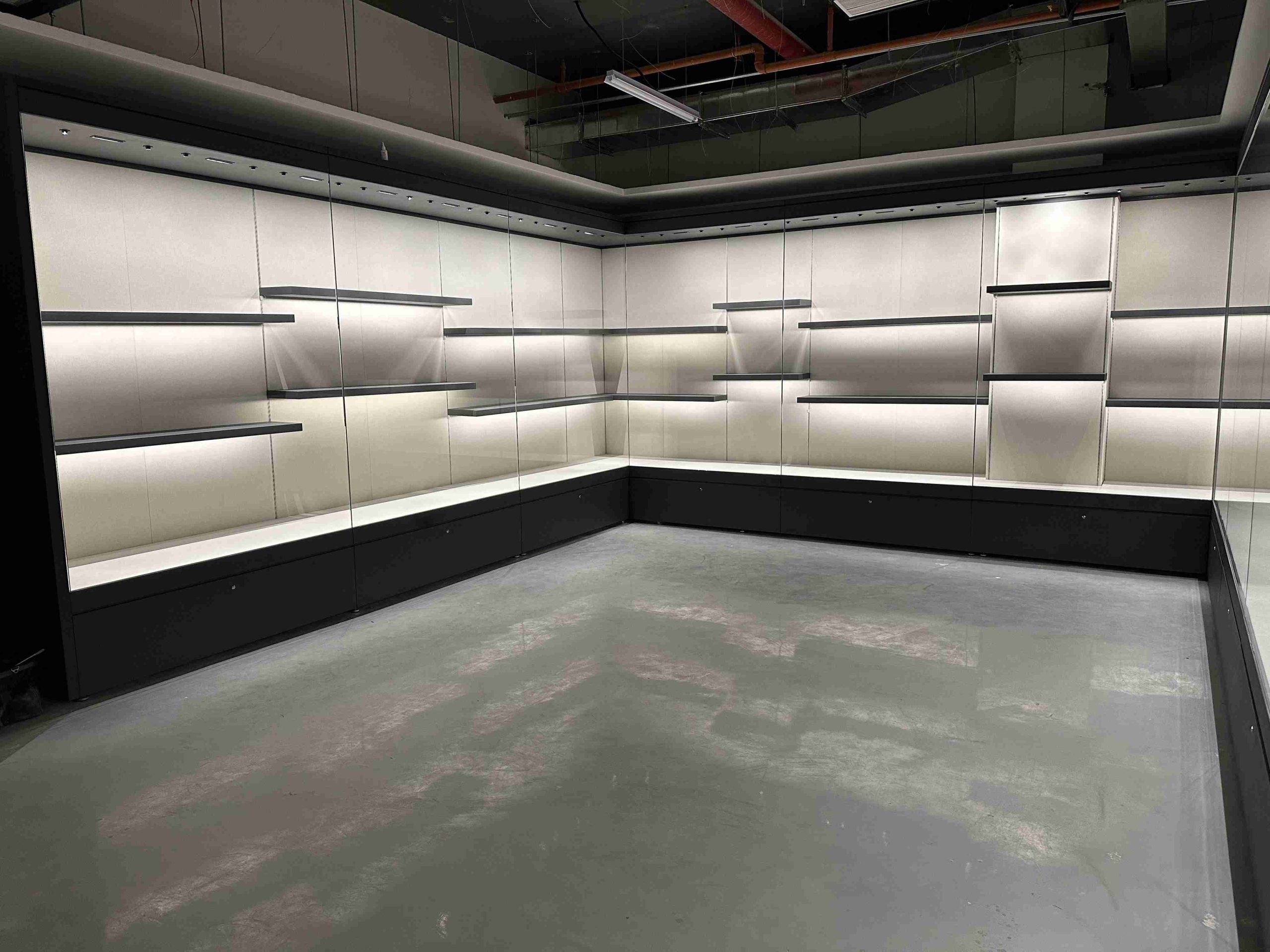
○ Niches in the wall (embedded in the wall): Use the space depth to display small cultural relics and enhance the visual level of the exhibition hall.
2. Ergonomic application
○ The height of the display cabinet table above the ground: flat cabinets are about 100-120cm, while inclined ones are about 70-90cm, ensuring unobstructed viewing for visitors.
○ The distance between the exhibits and the glass is ≥ 30cm, taking into account the lighting and maintenance operation space.
III. Safety performance: Multiple protection systems
1. Physical protection
○ Fire prevention: flame retardant materials are selected and fire extinguishing devices are built in;
○ Shock resistance: shock absorption devices are installed at the bottom to adapt to sudden vibration.
2. Environmental control
○ Constant humidity display cabinet (humidity fluctuation ≤ ± 5%): suitable for sensitive cultural relics such as calligraphy, painting and silk;
○ Ultraviolet filtration: the lighting system shall be equipped with UV filter layer, and the color temperature of the light source shall be ≤ 3000 K.
IV. Lighting and visual effects
1. Lighting design principles
○ Use cold light source (LED) to avoid heat accumulation;
○ Illumination uniformity ≥ 80% to highlight the details of cultural relics;
○ The light trough is designed to be hidden to prevent glare that could disturb visitors’ sight.
2. Display cabinet color blending
○ The appearance color is coordinated with the tone of the exhibition hall (such as neutral gray, matte white), so as to avoid overwhelming;
V. Customized demand and budget balance
1. Function priority ranking
○ Panoramic independent cabinet + constant humidity system is preferred for high-value cultural relics;
○ Small and medium-sized museums can choose modular combination cabinets to reduce maintenance costs.
2. Selection of suppliers
○ Give priority to professional manufacturers with cultural relics protection qualification;
○ Confirm after-sales service (such as regular inspection, emergency maintenance response time).
VI. Display aesthetic optimization
1. Display cabinet shape and space flow
○ The central display cabinet adopts polygonal design (such as hexagon) to break the monotonicity of linear display line;
○ Wall cabinets are interlaced with individual cabinets to create a visual rhythm.
2. Narrative displayof cultural relics
○ combination cabinet creates thematic atmosphere through lighting zoning;
Museum Display Case Specifications: Complete Buyer’s Checklist
Learn the essential museum display case specifications, including glass, lighting,...
Read MoreChoosing the Right Glass for Different Museum Display Applications
Choosing the Right Glass for Different Museum Display Applications Not...
Read MoreMuseum Display Case Glass: Types, Benefits, and How They Impact Visitor Experience
Museum Display Case Glass: Types, Benefits, and How They Impact...
Read MoreMuseum Display Case Cost Guide: What Influences Pricing?
Learn what affects museum display case pricing, including materials, climate...
Read More