Museum And Trade Show Display Cases
Museum and trade show display cases protect valuable objects while making them easier to view, understand, and remember. Whether you are presenting artifacts, fine art, jewelry, prototypes, collectibles, or branded products, the right case balances visibility, security, lighting, access, and installation needs. These answers cover common questions about glass display cabinets, custom museum display cases, art display cases, and practical display case ideas for permanent and temporary exhibits.
What are museum and trade show display cases?
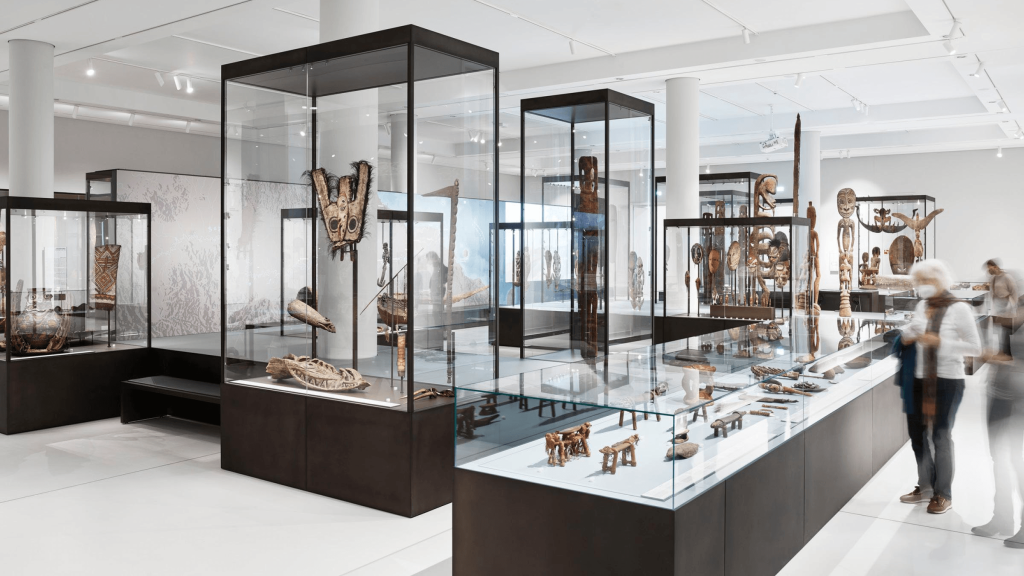
Museum and trade show display cases are protective presentation fixtures used to showcase objects in public, commercial, educational, or exhibition settings. In museums, they help preserve and secure artifacts while supporting interpretation and visitor flow. At trade shows, they help products stand out, reduce handling, and create a more polished booth experience.
The best case is not simply a box with glass. It should match the object’s size, value, material sensitivity, viewing angle, lighting requirements, and the amount of access staff need before, during, and after an event.
How are museum display cases different from trade show display cases?
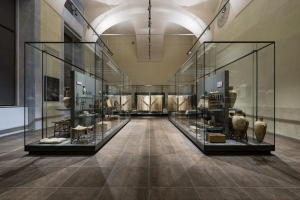
Museum display cases are usually designed for longer-term protection, controlled presentation, and careful object handling. They may need secure locks, stable internal environments, low-profile lighting, and finishes that do not distract from the collection. Many custom museum display cases are built around specific artifacts or exhibit layouts.
Trade show display cases are often more focused on portability, visual impact, quick setup, and brand presentation. They still need security and durability, but they may also need to fit booth dimensions, pack efficiently, or support frequent transport.
Key differences often include:
- Installation length: Museums often need long-term displays; trade shows are temporary.
- Access needs: Trade show teams may open cases frequently for demonstrations or restocking.
- Design emphasis: Museums prioritize interpretation and preservation; trade shows prioritize attention and conversion.
- Mobility: Trade show cases may need lighter materials, modular parts, or transport-friendly construction.
What types of display cases are available?
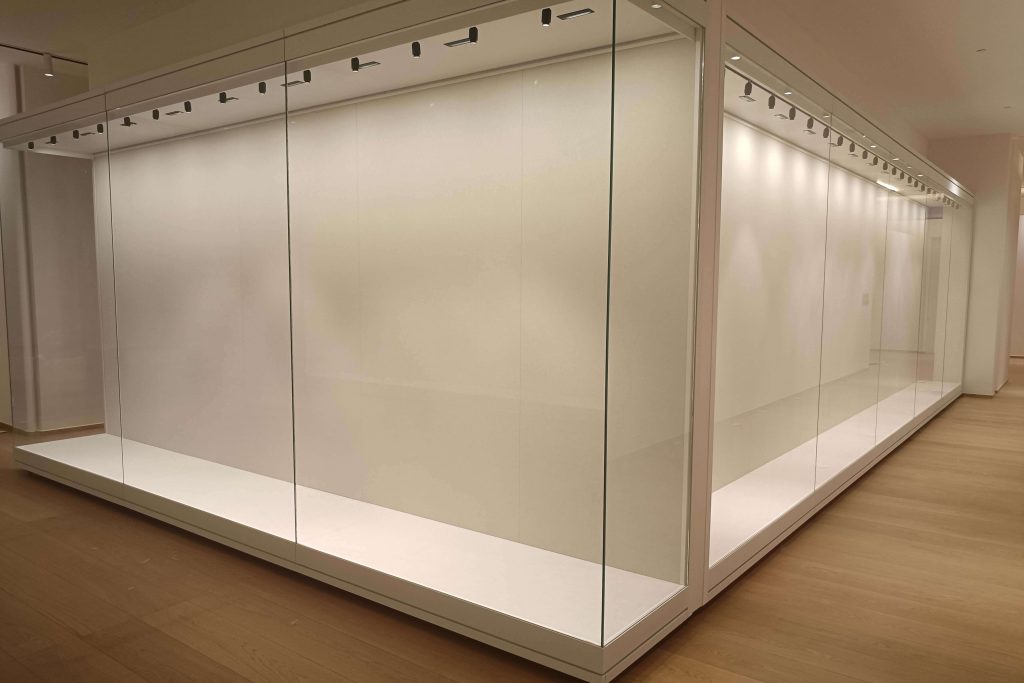
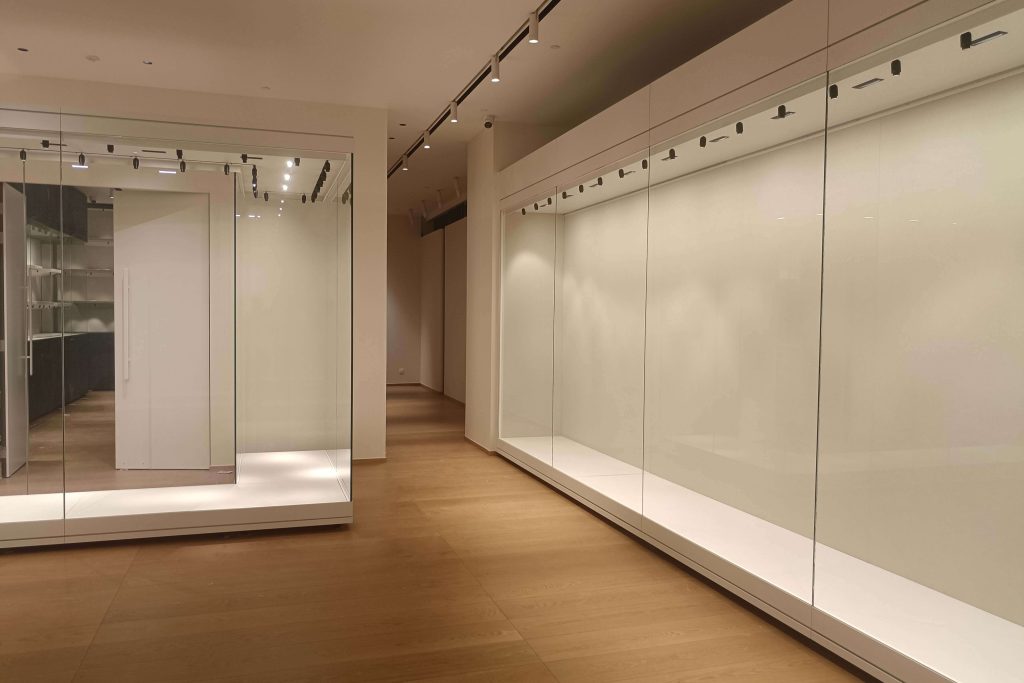
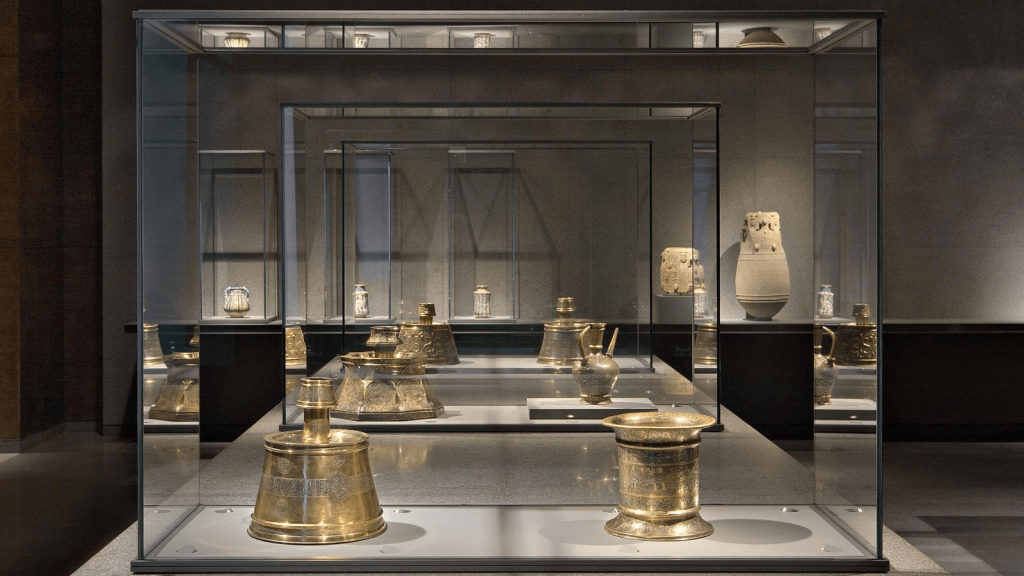
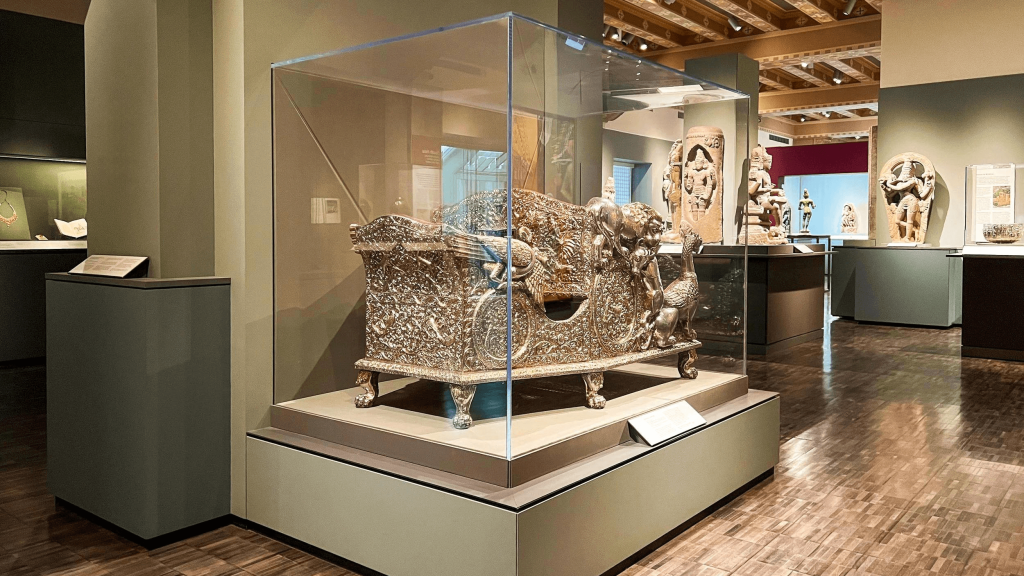
Common options include freestanding cases, tabletop cases, pedestal cases, wall-mounted cases, and built-in exhibit cases. Glass display cabinets are popular because they provide clear viewing from one or more sides while keeping objects physically protected. For collections that need a more architectural look, museum wall display cases can turn vertical space into a secure viewing area without taking up much floor space.
Typical case styles include:
- Freestanding display cases for objects viewed from multiple angles.
- Wall cases for documents, textiles, small artifacts, awards, or grouped collections.
- Counter cases for sculptures, models, luxury products, or single hero pieces.
- Tabletop cases for compact items at counters, booths, galleries, or retail-style exhibits.
- Custom built-in cases for permanent museum galleries or branded environments.
When should I choose custom museum display cases?
Custom museum display cases make sense when standard dimensions, finishes, lighting, or access points do not fit the object or the exhibit plan. They are especially useful for fragile artifacts, unusually shaped items, multi-object displays, or galleries where the case needs to blend into a larger design system.
Customization can also improve the visitor experience. A case built to the right height, depth, and sightline helps people see details without crowding, bending awkwardly, or missing interpretive labels. If security, environmental sensitivity, or presentation quality matters, custom work often provides a cleaner and safer result than forcing objects into off-the-shelf cases.
What should I consider when choosing glass display cabinets?
Glass display cabinets should be chosen for visibility, strength, access, and context. Clear viewing is important, but so is the way doors open, how shelves are supported, and whether lighting creates glare. A cabinet that looks good empty may not work well once labels, mounts, objects, and reflections are added.
Use this checklist before choosing a cabinet:
- Will visitors view the object from the front, sides, top, or all around?
- Does the cabinet need locking doors or controlled staff access?
- Are shelves adjustable for changing displays?
- Will internal lighting improve the display or create glare?
- Is the base stable enough for public areas or busy trade show aisles?
- Does the finish match the gallery, booth, store, or office environment?
Are art display cases necessary for paintings, sculptures, and mixed media?
Art display cases are useful when artwork needs protection from touch, dust, accidental impact, or environmental exposure. Sculptures, ceramics, textiles, paper-based works, and delicate mixed-media pieces can benefit from a case, especially in high-traffic spaces. Not every artwork needs enclosure, but many pieces are easier to preserve and manage when protected.
For three-dimensional works, the case should allow enough visual space around the object so it does not feel cramped. For smaller pieces, the mount, base, and lighting are just as important as the glass. A strong art display should feel intentional, not like storage placed in public view.
What are the benefits of museum wall display cases?
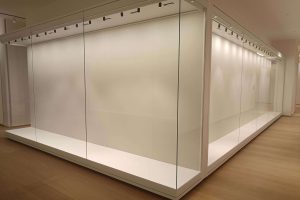
Museum wall display cases help preserve floor space while creating a clear, organized presentation. They work well for medals, documents, historical objects, small tools, jewelry, fossils, samples, photographs, and grouped interpretive displays. Because they sit on or within a wall, they can guide visitors through a sequence without interrupting traffic flow.
Wall cases are also useful when the display needs to be seen at eye level. They can support labels, background panels, object mounts, and thematic groupings in a compact format. For trade shows, wall-style cases or vertical cabinets can make a booth feel more finished while keeping important items off crowded tables.
What display case ideas work well for trade shows?
Strong trade show display case ideas start with the visitor’s first glance. The case should make the product easy to understand quickly, then invite closer inspection. Avoid placing too many items in one case, because crowding can reduce perceived value and make the display harder to scan.
Practical ideas include:
- Feature one hero product in a pedestal case near the aisle.
- Use tiered shelves to create height and separate product categories.
- Add simple labels with product names, materials, or key benefits.
- Use lighting to highlight texture, craftsmanship, or premium finishes.
- Keep backup inventory hidden so the display stays clean.
- Place lockable cases near staff zones for higher-value samples.
Can used museum display cases for sale be a good option?
Used museum display cases for sale can be a practical option when budget, timing, or sustainability matters. A pre-owned case may work well for temporary exhibits, educational spaces, collections storage areas, or trade show presentations where the dimensions already fit the need. However, used cases should be inspected carefully before purchase.
Check the glass condition, locks, hinges, seals, shelves, lighting, base stability, and overall finish. Also confirm that the case can be moved safely into your space and that replacement parts are available if needed. A used case is only a good value if it protects the object, looks appropriate, and does not create extra installation problems.
How do I choose the right case size?
Start with the object, not the room. Measure the item’s height, width, depth, and any mount or support it requires, then add enough space for viewing, labels, lighting, and safe handling. A case that is too tight can make the object look less important and may make installation difficult.
For multiple objects, plan the layout before buying the case. Group items by story, category, scale, or visual rhythm rather than filling every available inch. Negative space often helps visitors focus and gives the display a more professional appearance.
What security features should I look for?
Security needs depend on the value of the objects and the setting. At minimum, many public displays benefit from lockable access, stable construction, and materials that discourage casual handling. Higher-value items may require stronger glazing, concealed hardware, alarm compatibility, or limited access points.
Think about daily operations as well as risk. Staff should be able to open, clean, update, and close the case without unnecessary difficulty. A secure case that is hard to use may lead to rushed handling or inconsistent procedures.
How important is lighting inside a display case?
Lighting can make a display more readable, attractive, and engaging, but it needs to be planned carefully. Poor lighting can create glare, hot spots, shadows, or reflections that make objects harder to see. For sensitive materials, lighting choices should also consider exposure and heat.
In many cases, subtle lighting is better than dramatic lighting. The goal is to reveal detail, shape, color, and texture without distracting from the object. If the case will be used at a trade show, lighting should also work under changing hall conditions.
How should display cases be maintained?
Display cases should be cleaned and inspected regularly so they continue to protect objects and present them well. Dust, fingerprints, loose hardware, dim lighting, and scratched surfaces can make even a strong exhibit feel neglected. Maintenance is also a chance to catch small issues before they affect the display.
A simple maintenance routine can include:
- Cleaning exterior glass with appropriate products.
- Checking locks, hinges, and door alignment.
- Inspecting shelves, mounts, and object supports.
- Replacing or adjusting lighting when needed.
- Reviewing labels and backgrounds for wear.
- Confirming that the case remains stable and level.
Begin by defining what the case needs to protect, communicate, and support. List the objects, their dimensions, the viewing environment, security concerns, lighting needs, access requirements, and whether the display is temporary or permanent. This information makes it easier to compare standard cases, custom museum display cases, and used options without guessing.
A thoughtful plan saves time and helps avoid mismatched cases, crowded layouts, or awkward installation issues. Once the goals are clear, you can choose display cases that support the collection, serve the audience, and make the presentation feel intentional from the first look.