
As a key facility for the protection and display of precious cultural relics, the selection of materials for museum display cabinets is very important. Appropriate display cabinet materials should not only ensure the safety of cultural relics, but also enhance the viewing experience of the audience. The following are some common museum display cabinet materials and their characteristics.
Glass materials are an integral part of museum display cases, commonly used are ultra-clear glass and low reflection glass. Ultra-white glass has extremely high transparency, which can minimize the impact of glass color on the display of cultural relics, so that the audience can clearly appreciate the details of cultural relics. The low-reflection glass is specially coated to reduce the reflectivity and glare, so that the audience can view the cultural relics more comfortably. Laminated glass is composed of multiple layers of glass and PVB film, which has strong impact resistance. Even if it is broken, it will not scatter and hurt people, so as to protect the safety of cultural relics and spectators.
Metal materials are also widely used in museum display cabinets, especially aluminum alloy and stainless steel. Aluminum alloy is light, strong and corrosion-resistant, and can be processed into various shapes by extrusion, welding and other processes to meet the needs of different display cabinet designs. Stainless steel has excellent corrosion resistance, strength and hardness, is easy to clean and maintain, often gives a modern, simple feeling, suitable for many styles of museum exhibitions.

Synthetic materials, such as ceramic composites and carbon fiber composites, have excellent durability and environmental protection performance, can resist environmental erosion, and have strong plasticity, which can be customized according to the shape and size of cultural relics. These materials are becoming more and more popular in modern museum display cases because they are not only beautiful and durable, but also meet the needs of environmental protection and sustainable development.
Plastic materials, such as polycarbonate and polyethylene, are suitable for applications requiring transparency and lightweight due to their light weight, impact resistance and corrosion resistance. Polycarbonate is often used to make display panels, while polyethylene is often used for lining and filling materials. These materials need to consider their durability and environmental adaptability in long-term use to ensure the sustainability and safety of cultural relics display.

In addition to the above materials, museum display cabinets also use sealing and lighting components. High-quality sealing materials, such as rubber strips and silica gel, effectively block dust, moisture, and harmful gases entering the display cabinet. Lighting materials, like LED and optical fiber lamps, are essential for artifact display. LED lamps are currently the mainstream choice due to their energy efficiency, long life, and high color rendering. Optical fiber lamps provide heat-free, UV-free lighting, making them ideal for artifacts that are sensitive to temperature and UV radiation.
Huabo Art Exhibition has been deeply engaged in the design, customization, production and installation of exhibition cabinets for more than ten years, creating quality with ingenuity and leading the future with innovation. We focus on providing one-stop display cabinet solutions
for museums, art galleries, memorials, art galleries, science and technology museums, history museums, memorials and other cultural institutions.
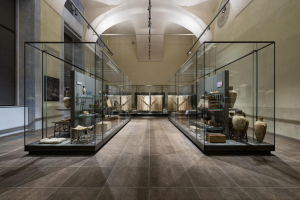
Museum Display Case Security: Locks, Sensors, and Access Control
Learn how museum display case security systems use high-security locks,...
Read More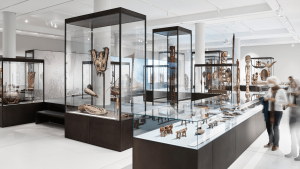
Acrylic vs Glass Museum Display Cases | Huabo
Compare acrylic and glass museum display cases in scratch resistance,...
Read More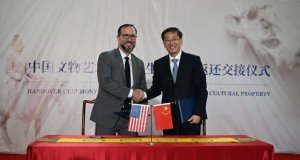
US Returns 64 Chinese Cultural Relics: What Happens After Repatriation?
The US has returned 64 Chinese cultural relics and fossils....
Read More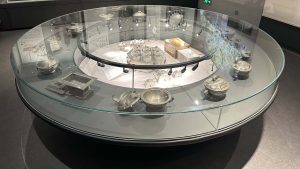
Featured Central Display Cases at the Cantonese Cuisine Museum
Huabo provided custom museum display cases for the Cantonese Cuisine...
Read More